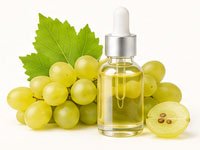
Grapeseed Oil

A lightweight, fast-absorbing botanical oil known for its silky texture, smooth finish, and versatility across face, body, hair, scalp, and everyday beauty routines.

Grapeseed Oil Benefits at a Glance

Why people choose grapeseed oil when they want lightweight moisture without a rich or heavy feel.


Lightweight & Fast-Absorbing

Its thin texture spreads easily and absorbs quickly, making it especially appealing for people who prefer lighter beauty oils.

Softens & Smooths Skin

Helps dry or rough-feeling skin feel softer, smoother, and more comfortable without leaving a heavy coating.

Adds Light Shine to Hair

Can help smooth dry-looking lengths and ends while adding softness and shine without weighing hair down as much as richer oils.

Easy to Blend

Its light consistency makes grapeseed oil useful on its own or as a base for blending with richer oils such as castor, argan, or jojoba.

Quick Facts

Botanical name: Vitis vinifera
Plant part: Seeds
Oil type: Carrier oil
Texture: Very light, thin, silky

Absorption: Fast
Scent: Mild to nearly neutral
Common uses: Face, body, hair, scalp, massage, and lightweight beauty oil blends

OVERVIEW

What Is Grapeseed Oil?

Grapeseed oil is a lightweight botanical oil extracted from the seeds of grapes, usually as a by-product of winemaking.

Although grape seeds are small, they contain an oil valued in skincare and haircare for its thin texture and smooth, silky feel. Compared with richer oils such as castor or argan oil, grapeseed oil feels noticeably lighter and tends to absorb more quickly.

This makes it a popular choice for facial oils, body oils, massage blends, scalp care, hair serums, and formulas designed to feel light rather than heavy or greasy.

Grapeseed oil is also commonly used as a carrier oil because it spreads easily and blends well with other botanical oils and essential oils.

What Makes Grapeseed Oil Different?

The main thing that sets grapeseed oil apart is its lightweight feel.

While some botanical oils create a richer, more noticeable layer on the skin, grapeseed oil has a thinner consistency and a relatively dry-feeling finish. It can provide softness and slip without the dense texture associated with heavier oils.

Its fatty acid profile is typically rich in linoleic acid, an omega-6 fatty acid commonly found in plant oils. Grapeseed oil also naturally contains smaller amounts of oleic acid and other lipid-soluble compounds.

For people comparing beauty oils by texture, grapeseed oil generally sits at the lighter end of the spectrum.

HISTORY & ORIGIN

Where Does Grapeseed Oil Come From?

Grapeseed oil comes from the seeds found inside grapes from the Vitis vinifera plant.

Grapes have been cultivated for thousands of years throughout the Mediterranean, Europe, the Middle East, and other wine-producing regions. For much of that history, the seeds left behind during wine production were considered a by-product.

As extraction methods improved, manufacturers began pressing or processing grape seeds to recover their naturally occurring oil.

Today, grapeseed oil is produced in many grape-growing regions and is used in both culinary and cosmetic applications.

From Winemaking By-Product to Beauty Oil

One of the most interesting things about grapeseed oil is that it gives another use to material that might otherwise be discarded during wine production.

After grapes are pressed for juice, the remaining skins, stems, pulp, and seeds are known collectively as grape pomace. The seeds can be separated, dried, and processed to obtain grapeseed oil.

Cosmetic grapeseed oil is now widely used in facial oils, body products, massage oils, haircare, soaps, and other personal-care formulas.

Common Producing Regions

Grapeseed oil can vary in color, scent, texture, and overall character depending on the grape variety, growing region, extraction method, refining process, and storage conditions.


COMPOSITION & FEEL

What Does Grapeseed Oil Feel Like?

Grapeseed oil is one of the lighter commonly used carrier oils.

It has a thin, fluid consistency that spreads easily across the skin and hair. It generally feels less rich than argan oil and much less dense than castor oil.

On the skin, grapeseed oil tends to leave a soft, smooth finish rather than a thick oily layer. This makes it especially useful when a lightweight feel is preferred.

For hair, a very small amount can be used on lengths and ends to add slip and shine without creating as much weight as heavier oils.

Fatty Acid Profile

The exact fatty acid profile of grapeseed oil can vary depending on grape variety, growing conditions, and processing method, but it is generally high in linoleic acid.

A typical profile may include:

Fatty Acid Typical Range What It Contributes
Linoleic acid 60–75% The dominant fatty acid in grapeseed oil; contributes to its light, fluid texture and smooth skin feel.
Oleic acid 12–25% Adds softness, conditioning, and a slightly richer feel.
Palmitic acid 5–10% Adds structure and contributes to the oil’s emollient feel.
Stearic acid 3–6% Supports smoothness and a soft, conditioned finish.

Its high proportion of polyunsaturated fatty acids contributes to grapeseed oil’s light texture, but it also means the oil is generally less oxidation-resistant than very stable oils such as jojoba.

For that reason, storage away from heat and direct sunlight is especially important.

Texture & How It Feels

Good to know

Because grapeseed oil is naturally light and fluid, a small amount spreads easily over the skin and hair. It is especially useful for people who prefer a less-rich oil or want to lighten heavier oils such as castor or argan oil.


APPLICATIONS

How to Use Grapeseed Oil in Beauty Routines

Because grapeseed oil is thin and easy to spread, only a small amount is usually needed. For facial use, start with 2–3 drops and apply to slightly damp skin or over moisturizer. For hair, rub 1–2 drops between the palms before smoothing lightly over the mid-lengths and ends. For body care, apply after bathing while the skin is still slightly damp.

Popular Beauty Uses

Face

Grapeseed oil is often chosen for facial routines because it feels lighter than many traditional beauty oils.

Apply a few drops to clean, slightly damp skin or layer it over a moisturizer to help soften the skin and reduce moisture loss.

Its light texture also makes it convenient for blending with other facial oils.

Body

Grapeseed oil works well as a lightweight body oil.

Massage a small amount onto damp skin after bathing to help leave the skin feeling softer and smoother.

Because it spreads easily, it can also be useful for larger areas of the body without requiring much product.

Hair & Scalp

Use a small amount on the mid-lengths and ends to add softness and light shine, or massage into the scalp as a lightweight pre-shampoo treatment.


Massage & Oil Blends

Grapeseed oil is widely used as a carrier oil because of its light texture and good slip.

It can be used alone for massage or blended with richer oils when you want to make the final mixture feel lighter and easier to spread.

COMPARE

Grapeseed Oil vs Other Beauty Oils

Grapeseed oil stands out mainly because of its light texture and fast absorption.

Oil Texture & Feel Absorption Feel Best For How It Differs from Grapeseed Oil
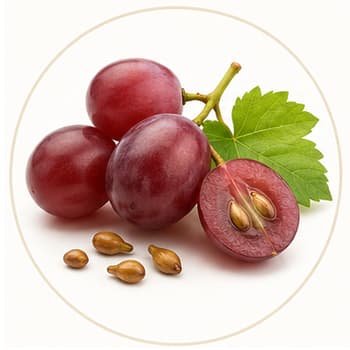
Grapes and grapeseeds Grapeseed Oil Very light, thin, silky Fast Lightweight face and body care, hair, scalp, massage, and oil blends The lightest and fastest-absorbing oil in this comparison.
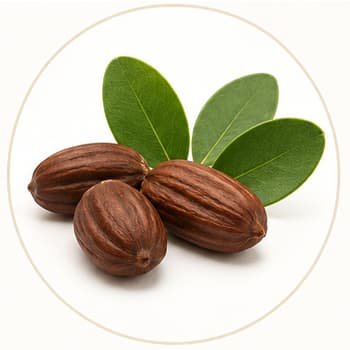
Jojoba seeds Jojoba Oil Light to medium, silky, wax-like Medium-fast Daily facial use, scalp care, beard care, nails, and hair Slightly richer and more substantial, with a silky wax-like feel rather than grapeseed oil’s thinner texture.
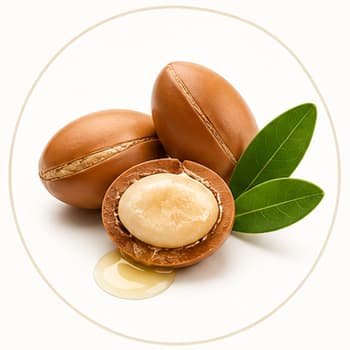
Argan nuts Argan Oil Medium, smooth, slightly rich Medium Dry-feeling skin, hair ends, frizz, shine, nails, and cuticles Feels richer and more nourishing, while grapeseed oil is lighter and faster-absorbing.
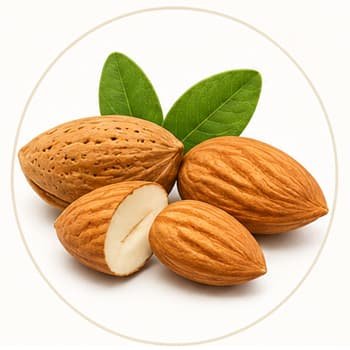
Sweet almonds Sweet Almond Oil Medium, smooth, cushiony Medium-slow Body care, massage, dry-feeling skin, and larger areas Feels richer and more cushiony, while grapeseed oil has a thinner, lighter finish.
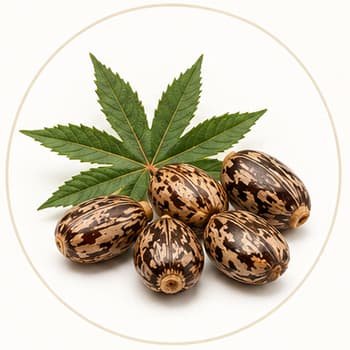
Castor seeds Castor Oil Very thick, rich, glossy Very slow Hair, scalp, brows, lashes, nails, cuticles, and targeted dry-feeling areas Much thicker and more coating; grapeseed oil is often used to make castor oil blends feel lighter and easier to spread.

If you dislike oils that feel rich or heavy, grapeseed oil is one of the better places to start.

If you want more conditioning, argan oil may feel more substantial. Jojoba offers a balanced middle ground, while castor oil is best when a very rich, coating texture is desired.

FAQ

Grapeseed Oil Questions, Answered

Is grapeseed oil good for the face?

Grapeseed oil is commonly used in facial skincare because it has a lightweight texture and spreads easily. A few drops can be applied to slightly damp skin or layered over moisturizer.

Compared with many botanical oils, grapeseed oil feels quite light. It has a thin consistency and generally absorbs faster than richer oils such as argan or castor oil.

Yes. Grapeseed oil can be applied in small amounts to the mid-lengths and ends of the hair to help add softness, smoothness, and light shine.

Yes. It can be used as a light scalp oil or pre-shampoo treatment. Because the texture is relatively thin, it spreads easily across the scalp.

Generally, yes. Grapeseed oil usually feels thinner and lighter, while jojoba has a slightly more substantial silky feel.

Yes. Argan oil usually feels richer and more conditioning, while grapeseed oil is thinner and faster-feeling on the skin.

Yes. Its lightweight texture makes it useful for blending with richer oils such as castor, argan, or jojoba oil.

Cosmetic grapeseed oil usually has a mild or nearly neutral scent, although the exact aroma can vary depending on how the oil is processed.

Keep grapeseed oil tightly closed and stored away from direct sunlight, excessive heat, and moisture. Because it is rich in polyunsaturated fatty acids, proper storage is especially important for maintaining freshness.

Remember: Everyone’s skin and hair are unique. What works well for one person may not work the same for another. Start with a small amount and adjust as needed.

Mirshka Botanica

Beauty oils, decoded.

A clean, practical guide to beauty oils, what they are, how they work, and how to use them for skin, hair, scalp, body, and nails.

Independent educational content.
Some articles may include affiliate links.

ABOUT

© 2026 Mirshka Botanica. All rights reserved. Educational content only. Not medical advice.