

A silky, nourishing botanical oil known for helping soften dry-feeling skin, smooth hair, add shine, and bring a healthy-looking finish to everyday beauty routines.
Why people choose argan oil for nourishing skin and hair care.
Helps leave dry, rough-feeling skin softer, smoother, and more comfortable.
Helps dry lengths and ends feel more conditioned while adding a smoother, glossier appearance.
Its medium-weight texture provides noticeable conditioning while still feeling lighter than very rich oils.
Works easily across facial care, body care, hair ends, scalp treatments, nails, and cuticles.
Botanical name: Argania spinosa
Plant part: Kernels
Oil type: Carrier oil
Texture: Medium, silky, slightly rich
Absorption: Medium
Scent: Mild, nutty, earthy when unrefined
Common uses: Face, body, hair, scalp, nails, cuticles, and dry-feeling areas
Argan oil is a golden botanical oil pressed from the kernels of the argan tree, Argania spinosa.
The tree is native to Morocco, where argan oil has a long history of use in food, traditional care, and beauty routines.
Cosmetic argan oil is valued for its smooth texture and balanced richness. It provides more nourishment than very lightweight oils such as grapeseed oil, while feeling considerably less heavy than castor oil.
This makes it especially popular in facial oils, hair serums, body oils, nail treatments, conditioners, and products designed for dry-feeling skin and hair.
Argan oil has a naturally high proportion of oleic and linoleic fatty acids, along with smaller amounts of naturally occurring tocopherols and other plant compounds.
Together, these components contribute to its soft, conditioning feel.
Unlike very thick oils, argan spreads easily and leaves a silky finish, making it especially useful when you want noticeable nourishment without a dense or sticky coating.
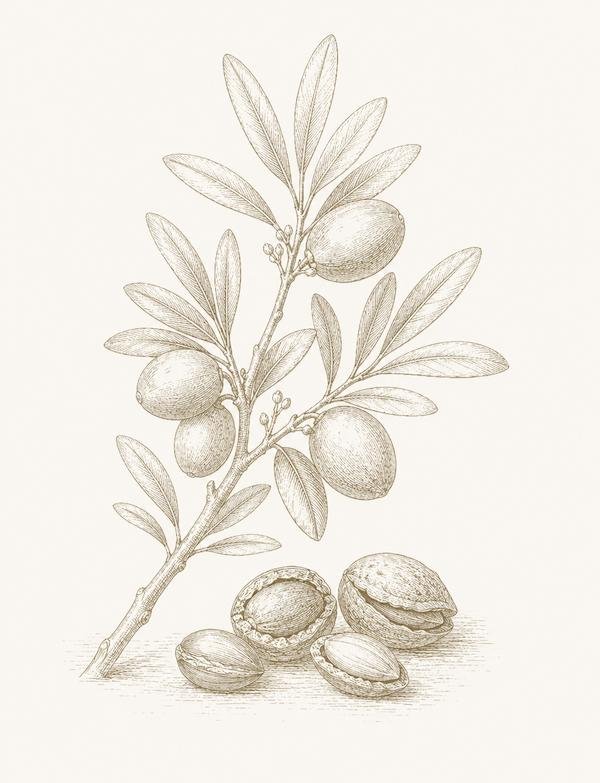
Argan oil comes from the argan tree, Argania spinosa, which grows naturally in southwestern Morocco.
The tree is well adapted to hot, dry conditions and produces fruits containing hard nuts. Inside each nut are kernels from which argan oil is extracted.
Argan trees have long been important to communities in Morocco, where the oil has traditionally been used for culinary, household, skin, and hair applications.
Today, argan oil is widely used around the world in cosmetic and personal-care products.
Cosmetic argan oil is typically produced from unroasted kernels.
Culinary argan oil is commonly made from roasted kernels, giving it a stronger aroma and flavor.
For beauty use, choose argan oil specifically intended for cosmetic or topical use.

Commercial argan production is strongly associated with:
The appearance, scent, and composition of the finished oil can vary depending on kernel quality, extraction method, roasting, filtration, and refining.
Argan oil is made primarily from triglycerides containing oleic and linoleic fatty acids.
These fatty acids contribute to the oil’s smooth texture, spreadability, and conditioning feel.
Argan oil also naturally contains smaller amounts of compounds such as tocopherols, sterols, and other unsaponifiable components.
| Fatty Acid | Typical Range | What It Contributes |
|---|---|---|
| Oleic acid | 42–49% | Contributes to softness, richness, and smooth spreadability. |
| Linoleic acid | 29–36% | Helps give argan oil a more balanced, lighter feel and supports conditioning. |
| Palmitic acid | 11–15% | Adds body, structure, and a slightly richer emollient feel. |
| Stearic acid | 4–7% | Contributes to smoothness, softness, and overall conditioning. |
| Linolenic acid | 0.1–0.5% | Present in small amounts and contributes to the oil’s overall fatty acid profile. |
Exact fatty acid composition varies by growing conditions, kernel source, extraction method, and processing.
Argan oil also contains naturally occurring tocopherols and phytosterols.
These minor components contribute to the distinctive composition of the oil, although their exact levels vary from batch to batch.
Cold-pressed, unrefined argan oil usually has a golden color and a mild natural scent.
More highly refined argan may appear lighter and have very little aroma.
A little argan oil usually goes a long way.
For facial use, start with 2–3 drops.For hair, begin with just one or two drops on the ends, especially if your hair is fine.
Argan oil can be used on its own or as part of a blend.
Its medium-weight texture makes it especially suitable for dry-feeling skin, hair lengths and ends, body care, and targeted nail or cuticle care.
Tip: Start with a small amount and add more only if your skin or hair needs it.
Apply 2–3 drops over slightly damp skin or after moisturizer.
Argan oil works well when you want a nourishing facial oil that still feels relatively silky.
Best used: morning or evening.
Rub 1–3 drops between your palms and smooth lightly over dry or damp lengths and ends.
It can also be used as a richer pre-wash treatment.
Best used: sparingly on ends or before washing.
Massage into slightly damp skin after bathing, or add a few drops to body lotion.
It works especially well on dry-feeling areas such as arms, legs, elbows, and knees.
Best used: after showering.
Massage a small amount into nails and cuticles to help soften dry-feeling skin around the nail area.
Best used: daily or as needed.
Argan oil is intended for external cosmetic use. Patch test before first use, particularly if you have sensitive skin or known nut sensitivities.
Avoid direct contact with the eyes and stop using the oil if irritation occurs.
Argan oil sits in the middle of the beauty-oil spectrum.
It is richer than lightweight oils such as grapeseed oil, but significantly less dense than castor oil. Its smooth texture makes it especially popular for hair, dry-feeling skin, and everyday conditioning.
| Oil | Texture & Feel | Absorption Feel | Best For | How It Differs from Argan Oil |
|---|---|---|---|---|
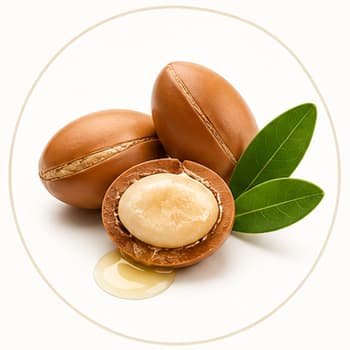 Argan Oil
|
Medium, silky, slightly rich | Medium | Hair, face, body, dry-feeling skin, nails and cuticles | Balanced nourishment with a smooth, silky finish. |
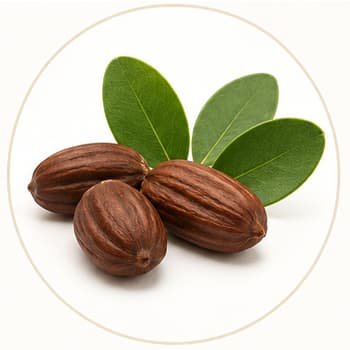 Jojoba Oil
|
Light to medium, silky, wax-like | Medium-fast | Daily facial use, scalp, beard care, body and nails | Lighter and slightly faster-feeling; technically a liquid wax rather than a traditional plant oil. |
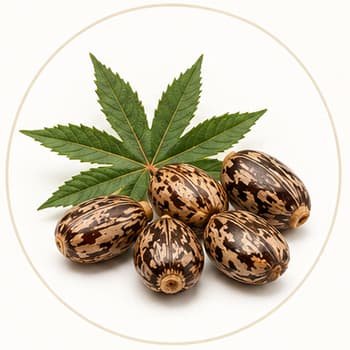 Castor Oil
|
Very thick, rich, glossy | Very slow | Hair, scalp, brows, nails, cuticles and targeted dry-feeling areas | Much thicker, heavier and more coating than argan oil. |
 Rosehip Oil
|
Light to medium, dry-feeling | Medium-fast | Facial care, dry-feeling skin and uneven-looking tone | Lighter and drier-feeling, with less of the rich conditioning feel associated with argan oil. |
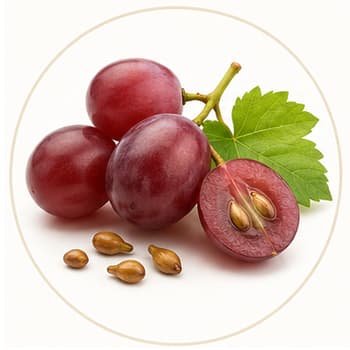 Grapeseed Oil
|
Very light, thin, dry-feeling | Fast | Lightweight blends, oily-feeling skin, hair and scalp | Much thinner and faster-absorbing, with less richness and cushioning. |
Argan blends well with both lighter and richer oils.
Argan + Jojoba: Creates a balanced, silky blend suitable for facial or body care.
Argan + Castor: Makes castor oil easier to spread while retaining a rich conditioning feel.
Argan + Rosehip: Creates a nourishing facial blend with a lighter finish.
Argan + Grapeseed: Produces a thinner, faster-spreading oil blend.
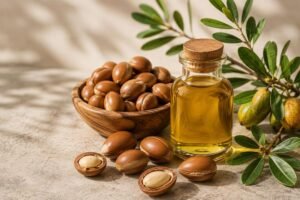
Argan oil is a botanical oil pressed from the kernels of the argan tree, Argania spinosa, which is native to Morocco.
Argan oil is commonly used in facial skincare because of its smooth, medium-weight texture. Start with 2–3 drops and adjust according to how your skin feels.
Argan oil can help dry-feeling skin feel softer, smoother, and more comfortable. For best results, apply it after moisturizer or to slightly damp skin.
Not directly. Oil does not add water to the skin. Argan oil works mainly as an emollient, helping soften the skin and reduce the feeling of dryness. Use it after a water-based moisturizer when hydration is your goal.
Yes. Argan oil is widely used on hair lengths and ends to help improve softness, smoothness, and shine. Start with one or two drops, particularly if your hair is fine.
Yes. A small amount can be massaged into the scalp as a pre-shampoo treatment. If your scalp becomes oily easily, use sparingly.
It can if too much is used. Fine or straight hair may need only one drop, while thicker or drier hair may tolerate more.
Yes, if it works well for your skin or hair. Daily use is easiest when you begin with a small amount.
Cosmetic argan oil is generally made from unroasted kernels and is intended for skin and hair use. Culinary argan oil is often made from roasted kernels, producing a stronger aroma and flavor.
Cold-pressed, unrefined cosmetic argan oil typically has a mild, natural nutty or earthy scent. Refined argan oil may have almost no scent.
Cold pressing is a mechanical extraction method that avoids high-temperature processing during extraction. Whether cold-pressed or refined is preferable depends on whether you value a more natural color and scent or a more neutral cosmetic ingredient.
Usually after. Apply your water-based products and moisturizer first, then use a few drops of argan oil as the final oil step.
For the face, start with 2–3 drops. For hair ends, one or two drops may be enough. For body care, apply only enough to lightly coat the skin.
Keep the bottle tightly closed and away from excessive heat, direct sunlight, and moisture. Proper storage helps preserve the oil’s quality.
Remember: Everyone’s skin and hair respond differently. Start with a small amount and adjust based on how your skin or hair feels.
Beauty oils, decoded.
A clean, practical guide to beauty oils, what they are, how they work, and how to use them for skin, hair, scalp, body, and nails.
Independent educational content.
Some articles may include affiliate links.
© 2026 Mirshka Botanica. All rights reserved. Educational content only. Not medical advice.