

A lightweight, silky liquid wax known for its smooth feel, excellent stability, and versatility across face, body, scalp, hair, beard, nails, and cuticles.
Why people love jojoba oil for everyday skin and hair care.

Leaves skin feeling smoother, softer, and more comfortable without a heavy finish.
Helps reduce moisture loss when used after moisturizer or on slightly damp skin.
Helps smooth dry ends, add shine, and condition a dry-feeling scalp.
Silky and relatively light, making it easy to use on the face, body, beard, nails, and hair.
Botanical name: Simmondsia chinensis
Plant part: Seeds
Oil type: Liquid wax / carrier oil
Texture: Light to medium, silky
Absorption: Medium-fast
Scent: Mild, slightly nutty
Common uses: Face, body, scalp, hair, beard, nails, cuticles, and dry-feeling areas
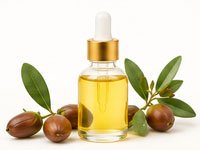
Jojoba oil is a golden liquid wax pressed from the seeds of the jojoba plant, Simmondsia chinensis.
Although it is commonly called an oil, jojoba is chemically different from most plant oils. Instead of being made mainly from triglycerides, it consists primarily of long-chain wax esters.
This unusual structure gives jojoba its distinctive feel: smooth, silky, easy to spread, and less heavy than many richer plant oils.
Jojoba is widely used in facial oils, moisturizers, scalp treatments, hair products, body oils, beard care, and nail products because it works well across many different beauty routines.
Jojoba stands out because it is technically a liquid wax rather than a traditional plant oil.
Its wax-ester structure gives it a silky, balanced feel and relatively strong oxidative stability. It spreads easily across the skin and hair without the dense or sticky finish of heavier oils such as castor oil.
Because it sits between very light oils and rich, heavy oils, jojoba is especially versatile for everyday use.
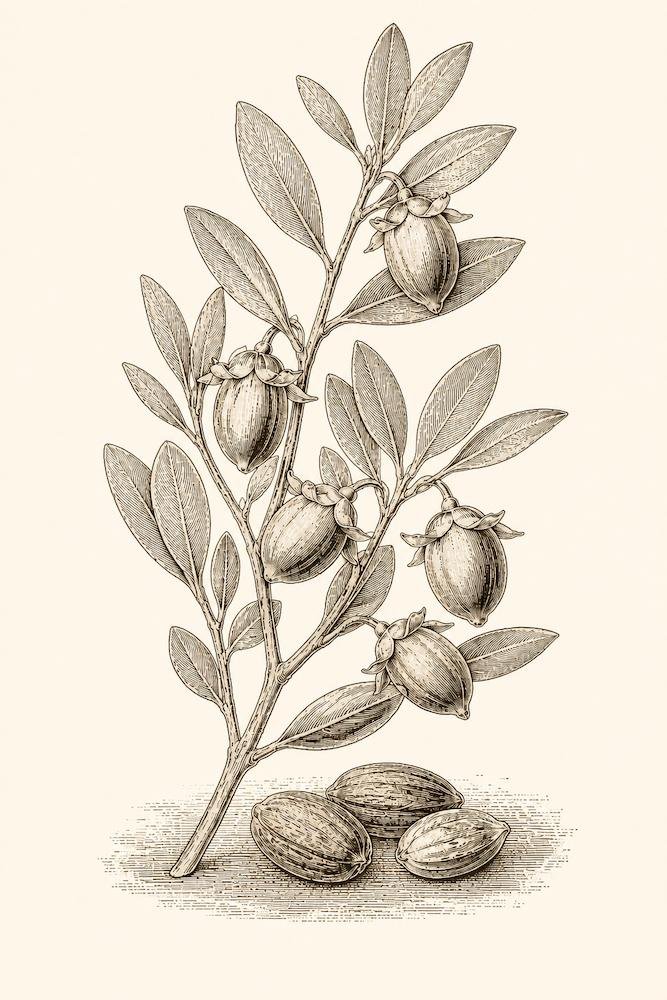
Jojoba comes from Simmondsia chinensis, an evergreen shrub adapted to hot, dry desert and semi-desert environments.
The plant is native to the southwestern United States and northern Mexico, particularly areas associated with the Sonoran Desert.
Jojoba produces seeds that contain a high percentage of liquid wax. This wax has been used traditionally for skin and hair care and later became widely used in modern cosmetic and personal-care products.
Today, jojoba is cultivated commercially in several dry regions around the world because the plant is well adapted to arid climates.

Color, scent, texture, and quality can vary depending on seed source, extraction method, refining, and storage.
Jojoba is composed primarily of long-chain wax esters rather than triglycerides.
These wax esters are what give jojoba its unusual stability, smooth texture, and distinctive skin feel.
Compared with heavier oils, jojoba feels lighter and less coating. Compared with very thin oils such as grapeseed oil, it offers a little more cushion and conditioning.
The exact composition varies depending on growing conditions, seed source, extraction, and refining, but jojoba is consistently dominated by long-chain wax esters.
| Component | Typical Role | What It Contributes |
|---|---|---|
| Eicosenoic acid–based esters | Major wax-esters | Help create jojoba’s characteristic stability and silky feel |
| Docosenoic acid–based esters | Long-chain wax components | Contribute to smoothness and conditioning |
| Oleic acid–based esters | Present in smaller amounts | Add softness and spreadability |
| Other long-chain wax esters | Supporting components | Contribute to jojoba’s lightweight yet protective feel |
Exact composition varies by seed source, extraction method, cultivation, and refining.
Jojoba may also contain smaller naturally occurring components such as tocopherols, phytosterols, and other plant compounds.
Cold-pressed, less-refined jojoba is typically golden in color and has a mild natural scent.
More highly refined jojoba may appear pale yellow or nearly clear and have very little scent.
Jojoba is especially useful when you want one versatile oil for several different beauty routines.
For facial use, start with only 2-3 drops. For hair, scalp, or body use, begin with a small amount and increase only if needed.
Jojoba is one of the easiest beauty oils to incorporate into an everyday routine because it spreads well, feels relatively lightweight, and works across multiple areas.
It can be used on its own or blended with other oils such as castor, argan, rosehip, almond, or grapeseed oil.
Because oils do not add water to the skin, jojoba works particularly well when applied after a water-based moisturizer or to slightly damp skin.
Tip: Start with 2-3 drops for the face or a small amount for hair and scalp, then adjust based on how your skin or hair feels.
Apply 2-3 drops to slightly damp skin or over a water-based serum or moisturizer.
Jojoba is popular for facial use because it feels lighter than many richer oils and leaves skin feeling soft and conditioned without a very heavy finish.
Best used: morning or evening, depending on your routine.
Massage a small amount into the scalp or apply sparingly to dry hair lengths and ends.
Jojoba can be used as a pre-wash treatment, scalp oil, or lightweight finishing oil.
Best used: before washing or in very small amounts on dry ends.
Apply to slightly damp skin after bathing or mix a few drops into body lotion.
Jojoba works well when you want softness and nourishment without a heavy, greasy feel.
Best used: after showering while skin is still slightly damp.
Massage 2-5 drops into the beard and the skin underneath.
Its smooth texture makes jojoba a popular base for beard oils.
Best used: on a clean beard after washing.
Jojoba is for external cosmetic use. Patch test before first use, especially if you have sensitive skin. Avoid getting oil directly into the eyes. Stop using it if irritation, redness, itching, or discomfort occurs.
Each beauty oil has a different texture, absorption feel, and ideal use.
Jojoba is known for its silky texture, medium-fast absorption, and versatility. It feels lighter than castor oil, more cushioning than grapeseed oil, and works well across both skin and hair routines.
There is no single “best” beauty oil. The right choice depends on your skin type, hair type, preferred texture, and how you plan to use it.
| Oil | Texture & Feel | Absorption Feel | Best For | How It Differs from Jojoba Oil |
|---|---|---|---|---|
| Jojoba Oil | Light to medium, silky, wax-like | Medium-fast | Face, scalp, hair, beard, body, nails | Balanced, stable, and highly versatile |
| Castor Oil | Very thick, rich, glossy | Very slow | Hair, scalp, brows, lashes, nails | Much heavier and more coating |
| Argan Oil | Medium, smooth, slightly rich | Medium | Hair ends, frizz, shine, dry-feeling skin | Slightly richer and more traditionally oil-like |
| Sweet Almond Oil | Medium, cushiony, smooth | Medium-slow | Body, massage, dry-feeling skin | Richer and especially useful for larger body areas |
| Grapeseed Oil | Very light, thin, dry-feeling | Fast | Lightweight blends, oily-feeling skin, hair | Thinner and faster-absorbing |
Jojoba works especially well as a blending oil because of its balanced texture.
Mix it with castor oil to make thick treatments easier to spread, combine it with argan oil for a richer hair or body blend, or mix it with grapeseed oil when you want an even lighter texture.
Here are simple answers to common questions about jojoba oil, including what it is, how it feels, and how to use it for skin and hair.
Technically, jojoba is a liquid wax rather than a traditional plant oil. It consists mainly of long-chain wax esters, which gives it a different texture and stability profile from triglyceride-rich oils such as olive or argan oil.
Yes.
Jojoba is commonly used in facial skincare because of its relatively lightweight, silky texture. Start with 2–3 drops and adjust according to how your skin responds.
Usually after. Apply water-based serums and moisturizer first, then use a small amount of jojoba as the final oil step.
Not directly.
Water hydrates skin. Jojoba acts mainly as an emollient, helping soften the skin and reduce moisture loss from the surface. For this reason, it works especially well when applied after moisturizer or to slightly damp skin.
Some people with oily or combination skin prefer jojoba because it feels lighter than many rich oils. Start with only one or two drops and see how your skin responds.
Jojoba can be used on the scalp, hair lengths, and ends to leave hair feeling softer and looking smoother and shinier. Fine hair generally needs only a very small amount.
Yes. It can be massaged into the scalp as a pre-shampoo oil treatment. Apply a small amount, massage gently, and wash afterward.
No oil can be guaranteed to be non-comedogenic for every person. If your skin is prone to congestion, introduce jojoba gradually and monitor how your skin responds.
Golden jojoba is typically less refined and retains more of its natural golden color and mild scent. Clear or very pale jojoba has generally undergone additional refining, which reduces color and scent.
For the face, start with 2–3 drops. For hair ends, one or two drops may be enough. For the scalp or body, use only enough to lightly coat the area without saturating it.
Jojoba can be used daily if it works well for your skin or hair. Start with a small amount and adjust based on your routine and how your skin or hair feels.
Keep jojoba tightly closed and away from excessive heat, moisture, and direct sunlight. Jojoba is relatively stable compared with many plant oils, but good storage still helps preserve quality.
Remember: Everyone’s skin and hair are different. Start with a small amount and adjust based on how your skin or hair responds.
Beauty oils, decoded.
A clean, practical guide to beauty oils, what they are, how they work, and how to use them for skin, hair, scalp, body, and nails.
Independent educational content.
Some articles may include affiliate links.
© 2026 Mirshka Botanica. All rights reserved. Educational content only. Not medical advice.