

A rich, thick beauty oil traditionally used for hair, brows, lashes, skin, scalp, and nails.
Why people choose castor oil for richer, more intensive beauty care.

Helps rough, dry-feeling skin feel softer, smoother, and more comfortable.

Helps dry lengths and ends look glossier and feel more conditioned.

Its rich texture makes it especially useful for small, targeted beauty routines.

A small amount provides a rich, coating feel that lasts longer than lighter oils.
Botanical name: Ricinus communis
Plant part: Seeds
Oil type: Carrier oil
Texture: Thick and viscous
Absorption: Slow
Scent: Mild, slightly nutty
Common uses: Hair, scalp, brows, lashes, dry-feeling skin, nails, and cuticles
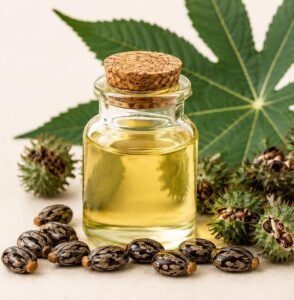
Castor oil is a thick, pale yellow carrier oil extracted from the seeds of the castor plant, Ricinus communis. It is known for its rich, viscous texture and its unusually high content of ricinoleic acid, a fatty acid that gives castor oil much of its distinctive feel.
Unlike lighter beauty oils that absorb quickly and leave a dry or silky finish, castor oil feels dense, glossy, and slow-absorbing. This makes it especially useful in beauty routines where a heavier, more coating oil is preferred — such as hair oiling, scalp care, brows, lashes, nails, cuticles, and targeted dry-feeling areas of skin.
Because of its texture, castor oil is usually best used in small amounts. It can be used on its own for targeted care, or blended with lighter oils such as jojoba, argan, almond, or grapeseed oil to make it easier to spread.
Castor oil stands out because it is much thicker than most common beauty oils. Its dense texture helps it coat hair, skin, brows, lashes, nails, and cuticles, but it may feel too heavy for full-face use or oily skin types.
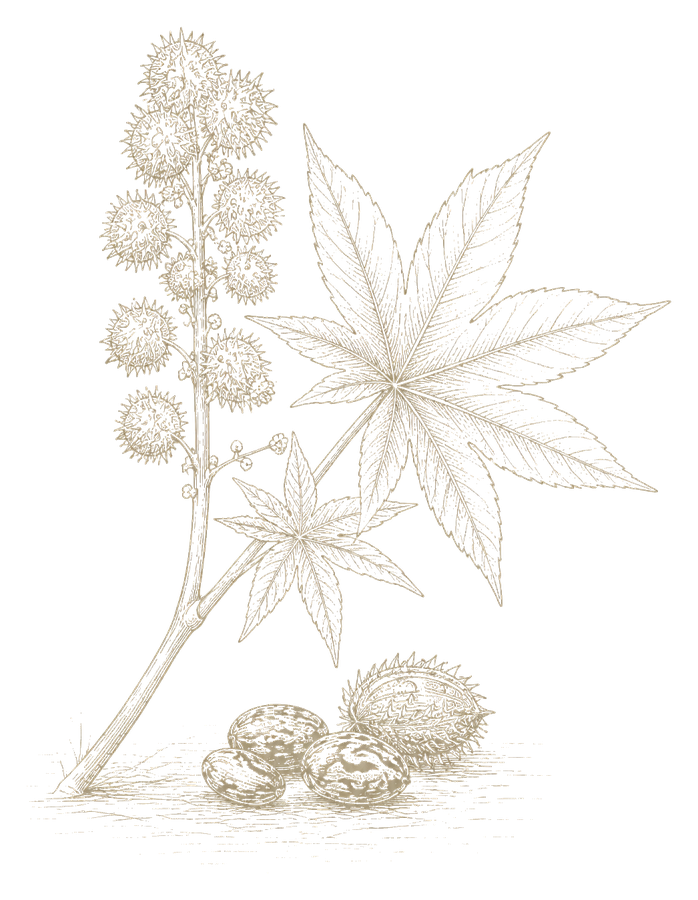
Castor oil comes from the seeds of Ricinus communis, commonly known as the castor plant. The plant is widely associated with warm, tropical and subtropical regions, and botanical sources describe it as growing primarily in seasonally dry tropical biomes. Its exact original native range is debated, but it is often linked to parts of Africa and Asia and is now found in many warm regions around the world.
Castor oil has a long history of use in personal care and traditional wellness practices. Historical and cultural references connect castor oil with ancient Egypt, India, the Mediterranean, Africa, and the Middle East, where it was used in different ways for body care, hair care, and practical household purposes.
In beauty routines, castor oil became especially associated with hair, scalp, brows, lashes, skin, and nails because of its dense, coating texture. Today, it remains popular as a rich cosmetic oil, especially for routines that call for a heavier, slower-absorbing oil rather than a light, fast-drying one.

Color, scent, texture, and quality can vary depending on seed source, extraction method, refining, and storage.
Castor oil is a triglyceride-rich plant oil pressed from the seeds of Ricinus communis. What makes it unusual is its fatty acid profile: castor oil is dominated by ricinoleic acid, a hydroxylated fatty acid that gives the oil much of its thick, glossy, slow-absorbing character.
Compared with lighter beauty oils, castor oil feels heavier and more coating on the skin and hair. This is why it is often used in targeted routines, blended with lighter oils, or applied where a richer, more protective-feeling oil is preferred.
The exact profile can vary depending on seed source, cultivation, extraction method, and refining, but castor oil is consistently known for its unusually high ricinoleic acid content.
| Fatty Acid | Typical Range | What It Contributes |
|---|---|---|
| Ricinoleic acid | 85–95% | The signature fatty acid in castor oil; contributes to thickness, gloss, and a coating feel. |
| Oleic acid | 2–6% | Adds conditioning and softness. |
| Linoleic acid | 1–5% | A lighter fatty acid found in many plant oils. |
| Palmitic acid | 0.5–1.5% | Adds structure and a slightly richer feel. |
| Stearic acid | 0.5–1.5% | Contributes to emolliency and smoothness. |
*Ranges are approximate and can vary by source, extraction method, and refining.
Castor oil may also contain minor naturally occurring compounds such as phytosterols, tocopherols, phenolic compounds, pigments, and other trace components. These minor components can vary widely between crude, cold-pressed, refined, and deodorized oils.
For cosmetic use, these differences may affect color, scent, clarity, shelf life, and how the oil feels in a formula or beauty routine.
Because castor oil is so thick, a few drops can go a long way. For easier spreading, blend it with a lighter oil such as jojoba, argan, almond, or grapeseed oil.
Castor oil is a rich, slow-absorbing oil that works best in targeted beauty routines. Because it is much thicker than many other plant oils, it is often used in small amounts on hair, scalp, brows, lashes, nails, cuticles, and dry-feeling areas of skin.
It can be used on its own, but many people prefer to blend castor oil with lighter oils such as jojoba, argan, almond, or grapeseed oil to make it easier to spread and more comfortable for everyday use.
Tip: A little goes a long way. Start with 1-2 drops for small areas, or blend castor oil with a lighter carrier oil before applying it to larger areas.
Use a small amount of castor oil on the scalp or through dry hair lengths when a richer, more coating oil is preferred. It can be massaged into the scalp, applied to ends, or blended with a lighter oil for easier spreading.
Best used: before washing, as a short treatment, or in small amounts on dry ends.
Castor oil is popular in brow and lash routines because of its thick texture and glossy finish. Apply only a very small amount with a clean spoolie or cotton swab, and avoid getting oil directly into the eyes.
Best used: at night, on clean, dry brows or lashes.
Because castor oil feels dense and slow-absorbing, it is usually better for targeted dry feeling areas rather than full-face use. It may be applied to rough patches, elbows, knees, heels, or areas that need a richer, protective feeling oil.
Best used: sparingly, or blended with a lighter oil.
Castor oil can be massaged into dry cuticles and brittle-feeling nails to leave them looking smoother and more conditioned. Its thick texture helps it stay in place longer than lighter oils.
Best used: one small drop per nail area.
Castor oil is for external cosmetic use only. Patch test before first use, especially if you have sensitive skin. Avoid getting it directly into the eyes, and use only a very small amount near the lash line. If irritation, redness, itching, or discomfort occurs, stop using it.
Each beauty oil has a different texture, absorption rate, and ideal use. Castor oil is known for being thick, glossy, and slow-absorbing, while many other plant oils feel lighter and spread more easily.
This comparison can help you understand when castor oil may be useful on its own, and when it may be better blended with lighter oils such as jojoba, argan, sweet almond, or grapeseed oil.
Note: There is no single “best” oil for everyone. Many people get the best results by using different oils for different needs, or by blending oils together.
| Oil | Texture & Feel | Absorption Feel | Best For | How It Differs from Castor Oil |
|---|---|---|---|---|
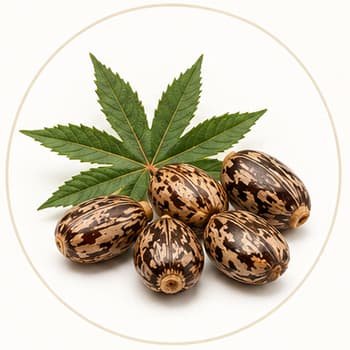 Castor Oil
|
Very thick, rich, glossy | Very slow | Hair, scalp, brows, lashes, nails, cuticles, targeted dry-feeling areas | The richest and most coating oil in this comparison. |
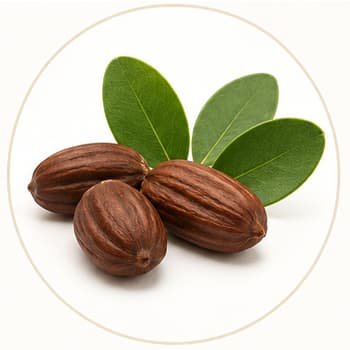 Jojoba Oil
|
Light to medium, silky, wax-like | Medium-fast | Daily facial use, scalp balance, beard care, most skin types | Feels lighter, spreads more easily, and is often better for everyday facial use. |
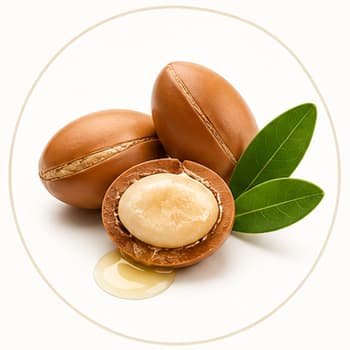 Argan Oil
|
Medium, smooth, slightly rich | Medium | Hair ends, frizz, shine, dry-feeling skin | Gives a softer, smoother finish with less heaviness than castor oil. |
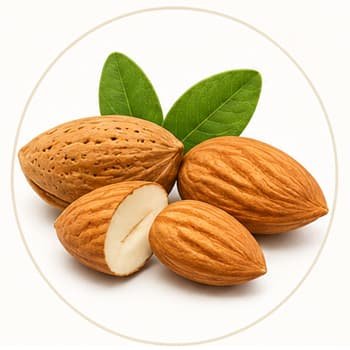 Sweet Almond Oil
|
Medium, cushiony, smooth | Medium-slow | Body care, massage, dry-feeling skin, larger areas | More versatile for larger areas and easier to apply generously. |
 Grapeseed Oil
|
Very light, thin, dry-feeling | Fast | Lightweight blends, oily-feeling skin types, hair, scalp | Much lighter and faster-absorbing; often used to dilute heavier oils. |
Castor oil is often blended with lighter oils to make it easier to spread. Jojoba, argan, sweet almond, and grapeseed oil can all soften the heavy feel of castor oil while keeping some of its rich, coating texture.
Here are simple answers to common questions about castor oil, including how it feels, where it is commonly used, and when a lighter oil may be a better choice.
Castor oil is commonly used in hair and scalp routines because of its thick, coating texture. It can help dry hair lengths look smoother and glossier, especially when used before washing or blended with a lighter oil. Because it is heavy, it is usually best used sparingly.
Castor oil is often associated with hair growth routines, but it should not be treated as a guaranteed hair-growth solution. Its main cosmetic value is its rich, coating feel, which can make hair, brows, and lashes look smoother, shinier, and more conditioned.
You can use castor oil on the face, but it may feel too heavy for some skin types. It is usually better for targeted dry-feeling areas rather than full-face use. If you have oily, congested, or sensitive skin, start with a very small amount or choose a lighter oil.
Castor oil is popular for brows and lashes because it has a thick texture and glossy finish. Use only a tiny amount with a clean spoolie or cotton swab, and avoid getting the oil directly into the eyes. Stop using it if irritation occurs.
Castor oil is naturally rich in ricinoleic acid, a fatty acid that gives it a dense, viscous, slow-absorbing texture. This makes it feel heavier and more coating than many common beauty oils.
Yes. Many people prefer to blend castor oil with lighter oils such as jojoba, argan, sweet almond, or grapeseed oil. This makes it easier to spread and more comfortable for larger areas of skin or hair.
For most beauty routines, start with occasional use rather than daily use. For hair and scalp, many people use it before washing. For nails, cuticles, brows, lashes, or dry-feeling areas, use a very small amount and adjust based on how your skin or hair responds.
No. This guide focuses on external cosmetic use of castor oil for beauty routines. Castor oil packs are part of a different wellness practice and are not the focus of this page.
Remember: Everyone’s skin and hair are unique. What works well for one person may not work the same for another. Start with a small amount and adjust as needed.
Beauty oils, decoded.
A clean, practical guide to beauty oils, what they are, how they work, and how to use them for skin, hair, scalp, body, and nails.
Independent educational content.
Some articles may include affiliate links.
© 2026 Mirshka Botanica. All rights reserved. Educational content only. Not medical advice.